Overview
How U.S. state rules differ for sportsbooks, DFS, and prediction markets — and why your integration should treat each channel separately.
State-by-State Regulation
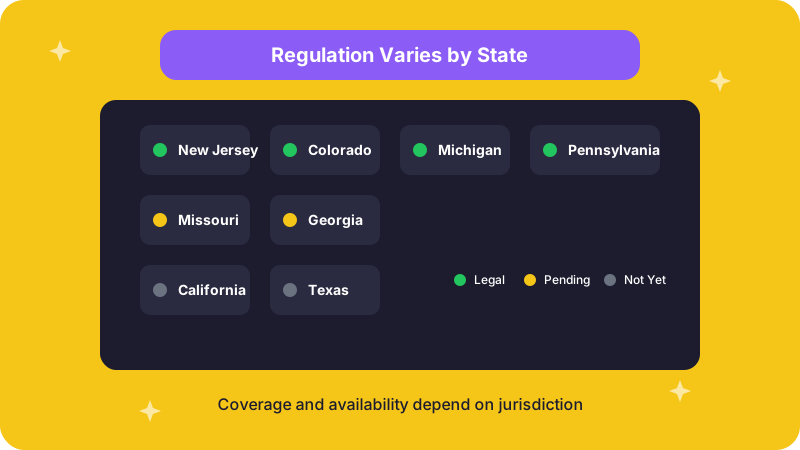
Sports betting, daily fantasy, and prediction-market products are regulated differently in the United States. A rule that applies to a licensed sportsbook may not apply to a DFS pick’em product or a CFTC-listed event contract — and alternative sports often sit in a gray area that requires explicit approval in each channel and state.
If you are building on the ALT Sports Data API, treat jurisdiction × product type as a matrix, not a single “US legal” flag.
Explore by operator type
Each channel has its own regulators, licensing paths, and carve-outs. Use the sections below for channel-specific nuance and interactive availability maps.
Established Sportsbook Platforms
State gaming commissions, approved sports and market types, retail vs mobile.
Daily Fantasy Sports Platforms
Skill-game statutes, pick’em products, and where major DFS apps run paid contests.
Prediction Market Platforms
Event contracts, federal vs state tension, and signup rules by exchange.
How regulations vary
By state
Every legal sports-betting state maintains its own regulatory body. Those bodies decide eligible sports, leagues, and market types — and whether alternative or emerging sports need a separate petition.
DFS and prediction markets may follow different agencies or legal theories (skill game, lottery, derivatives), so do not assume sportsbook approval implies DFS or event-contract approval.
By sport type
- Established alternative sports (e.g. jai alai, lacrosse) are more likely to have precedent in sportsbook catalogs.
- Emerging formats may require case-by-case approval.
- Skill vs outcome framing can matter for DFS and for how regulators classify events.
By operator
Even in one state, two licensees may have different approved catalogs. One operator may offer markets on your league while another has not petitioned yet.
What this means for your integration
Design for partial availability
Do not assume every sport and market in the API is launchable everywhere. Model entitlements by jurisdiction and product type.
Separate data from enablement
The API can expose data for all supported sports; what you offer for real-money play is a compliance decision on top of the feed.
Plan for a rolling launch
Approvals arrive incrementally. Roadmaps should assume staged state and channel rollout.
Stay current
Rules change. Review updates on a regular cadence — at least quarterly.
Working with ALT Sports Data on compliance
ALT Sports Data can help you understand API coverage and what the team has seen in market. Legal clearance for offering wagers or contracts in a given state remains with your counsel and operators.
Onboarding checklist:
- Map your target sports to each channel (sportsbook, DFS, prediction) and state list.
- Flag sports that may need extra regulatory work before launch.
- Align on data-integrity and reporting expectations for your regulators.
Further reading
- About ASD Platform API
- Integration Setup
- Use Cases
- Active Operators — how sportsbooks, DFS, and prediction markets consume data differently.